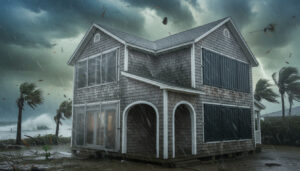
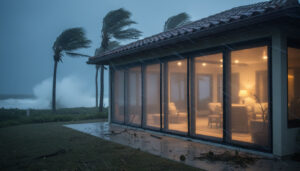
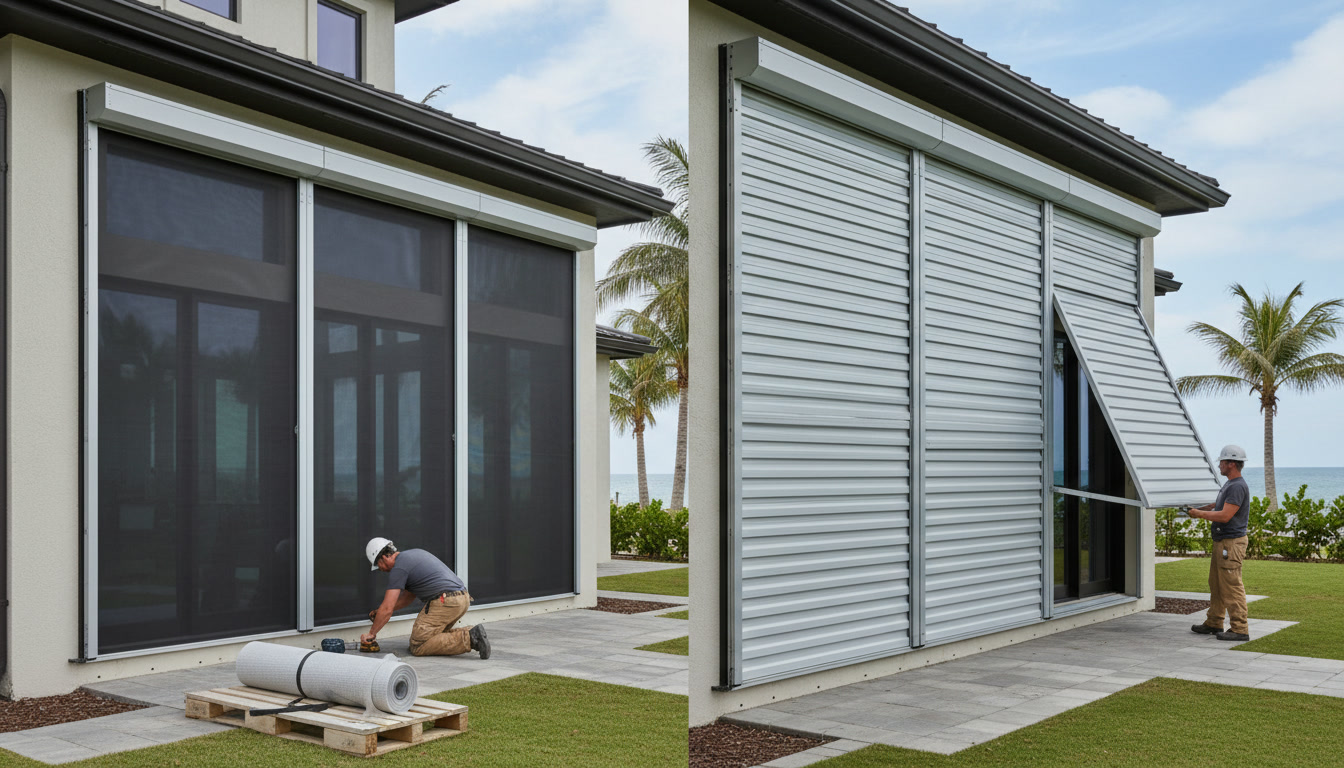
Choosing between hurricane screens vs shutters depends on your budget, aesthetic preferences, and protection needs. Both systems meet Florida Building Code standards when properly installed, but they differ in material, deployment method, visibility, and price point. Hurricane screens use high-strength fabric stretched across frames, while shutters employ rigid materials like aluminum, steel, or polycarbonate to shield windows and doors from wind-borne debris and pressure.
Why Coastal Homeowners Need Storm Protection
Coastal North Carolina faces tropical storms and hurricanes nearly every year. Wind speeds above 74 mph turn loose branches, roof tiles, and signs into projectiles that shatter windows and compromise your home’s building envelope. Once wind enters through broken glass, internal pressure can lift roofs and collapse walls.
Standard windows cannot withstand the impact forces generated during major storms. Insurance companies increasingly require documented storm protection to maintain full coverage in high-risk zones. Many mortgage lenders mandate protection systems for coastal properties, making the choice between screens and shutters a practical necessity rather than an optional upgrade.
How Hurricane Screens Work
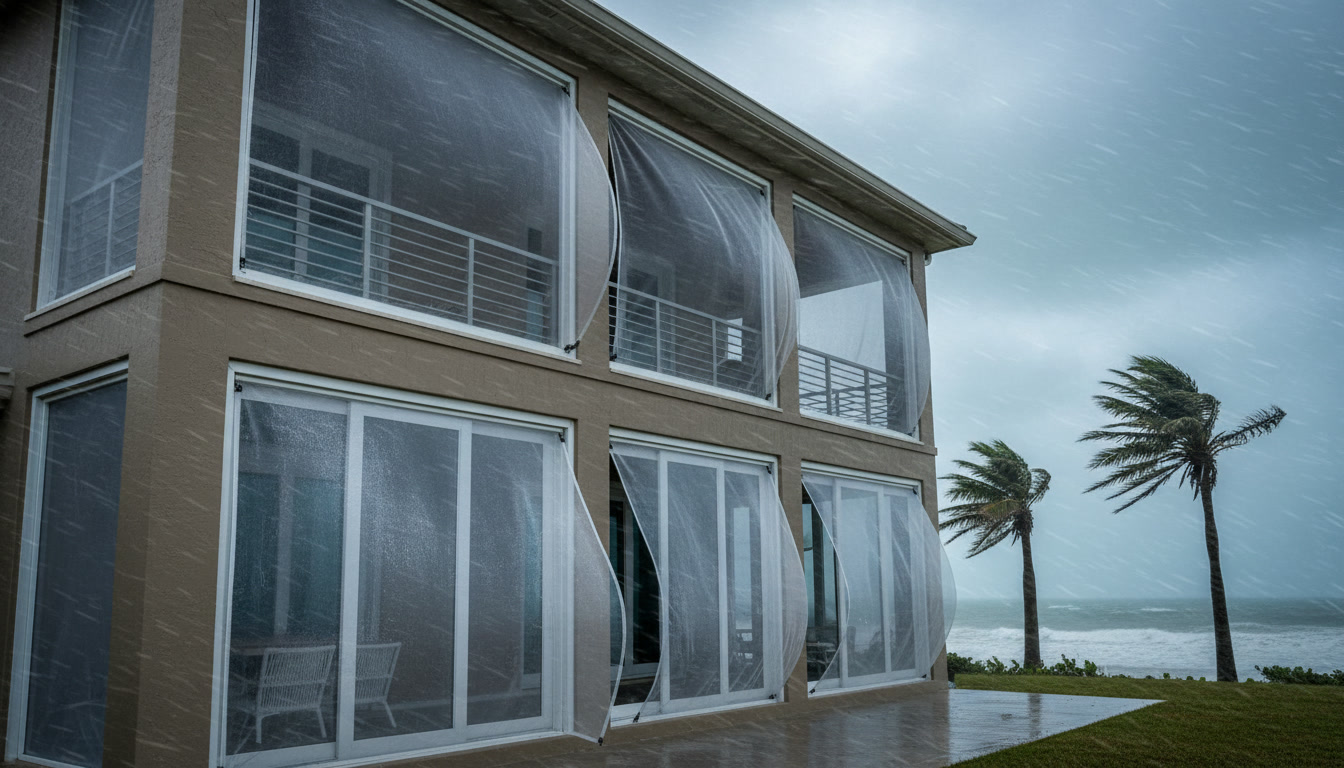
Hurricane screens consist of woven fabric made from high-density polyethylene or aramid fibers engineered to absorb and dissipate impact energy. The fabric attaches to tracks or frames mounted around window and door openings. When debris strikes the screen, the flexible material stretches slightly to absorb the blow rather than transferring force directly to the window behind it.
Most systems roll down from a housing mounted above the opening or deploy from side tracks. The fabric typically blocks 75 to 85 percent of light while maintaining some visibility. Seacoast Systems Inc installs screens that meet ASTM testing protocols for large and small missile impacts, wind pressure ratings up to 200 mph, and water penetration resistance.
How Traditional Hurricane Shutters Function
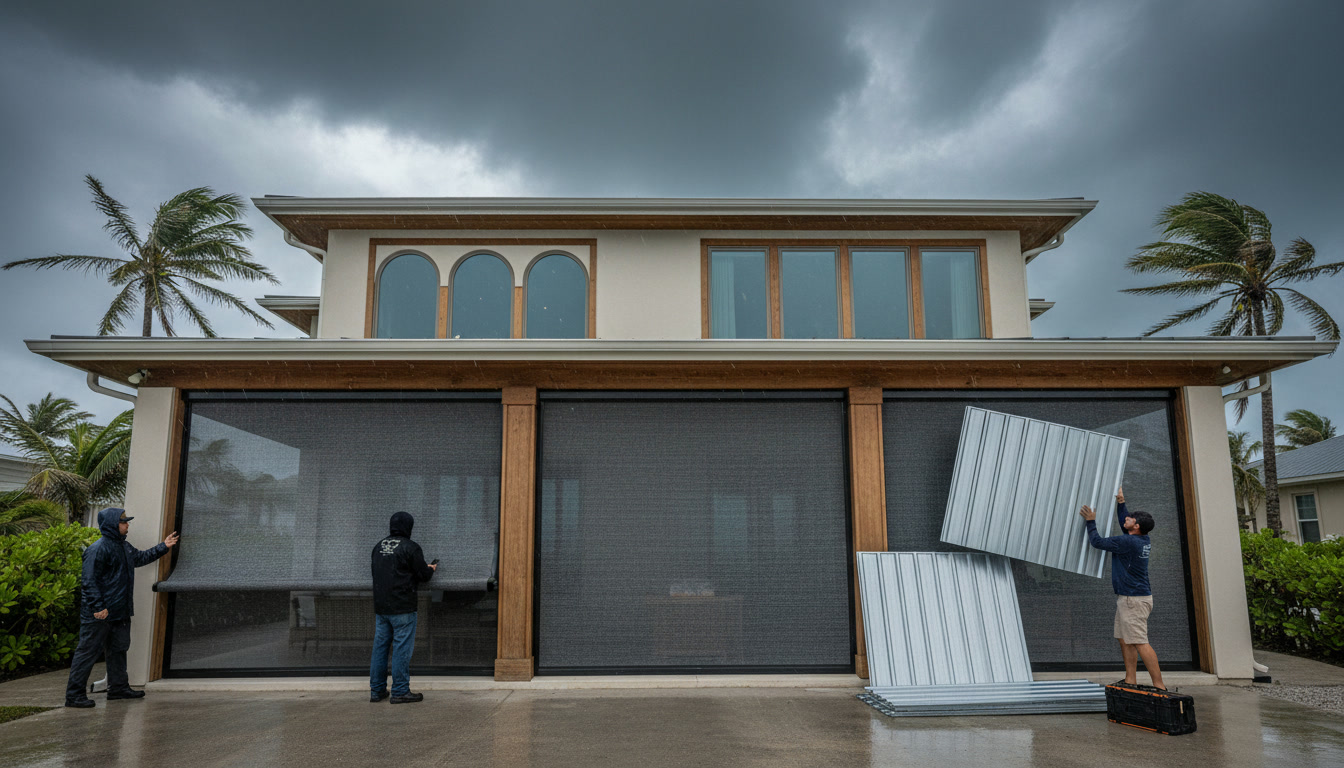
Hurricane shutters use solid or louvered panels made from aluminum, steel, or reinforced polycarbonate. The panels mount directly over windows and doors, creating a physical barrier between your glass and storm debris. Different styles deploy in different ways: accordion shutters fold out from side tracks, roll-down shutters descend from overhead housings, colonial shutters swing closed and lock, and Bahama shutters prop down from hinges above the window.
Shutters block 100 percent of light when closed and eliminate all visibility. This total coverage provides maximum protection but leaves your home completely dark during storms. Most metal shutters can withstand repeated impacts without permanent deformation, and they require minimal maintenance beyond occasional lubrication of tracks and hardware.
Comparing Visibility and Natural Light
Hurricane screens allow you to see outside even when deployed. This visibility helps you monitor storm conditions, check for damage, and maintain spatial awareness if you remain home during the event. The semi-transparent fabric also lets in diffused natural light, reducing the need for artificial lighting and preserving a less claustrophobic environment.
Shutters eliminate both visibility and light. While this provides complete protection, it also means you cannot see outdoors without opening the shutters and exposing your windows. For homeowners who evacuate before storms, this difference matters less. For those who shelter in place, the ability to see outside can reduce anxiety and improve situational awareness.
Installation Requirements and Deployment Speed
Both systems require professional installation to ensure proper anchoring into structural framing. Screens need tracks or frames securely fastened at multiple points around each opening. Shutters demand even stronger mounting because rigid panels generate greater leverage forces under wind load.
Motorized roll-down screens deploy in 30 to 60 seconds per window with the push of a button. Manual screens take two to three minutes per opening. Accordion shutters deploy manually in about the same time frame. Roll-down metal shutters with motors match screen deployment speed. Colonial and Bahama shutters require more time because each panel must be individually secured with locks or bolts.
Deployment speed matters most when storms intensify quickly. The faster you can protect your home, the less likely you are to skip protection altogether due to time constraints or approaching dangerous winds.
Hurricane Protection in Wilmington: Meeting Local Code Requirements
Wilmington building codes follow North Carolina’s statewide standards, which reference the International Building Code with amendments for coastal wind zones. Both screens and shutters can meet these requirements when properly rated and installed. The key factor is not the product type but the tested wind pressure resistance and impact rating.
Products must pass large missile impact tests, simulating a nine-pound 2×4 traveling at speeds determined by your location’s wind zone. They must also withstand small missile tests using ball bearings fired at high velocity. Pressure testing verifies the system remains intact under sustained wind loads and rapid pressure changes. Your installer should provide documentation showing compliance with local certification requirements.
Durability and Lifespan Comparison
Hurricane screens typically last 10 to 15 years before fabric degradation requires replacement. Ultraviolet exposure, salt air, and repeated deployment cycles gradually weaken the fibers. Quality screens include UV inhibitors that extend fabric life, but replacement remains more frequent than with metal shutters.
Aluminum and steel shutters often last 25 to 30 years or longer with minimal maintenance. Polycarbonate panels can yellow or become brittle after 15 to 20 years of UV exposure. Metal components may require periodic repainting in coastal environments to prevent corrosion, but the structural integrity remains sound for decades.
This durability difference affects long-term cost calculations. While screens may cost less initially, multiple fabric replacements over 30 years can equal or exceed the one-time investment in quality shutters.
Aesthetic Impact on Home Appearance
Hurricane screens in the retracted position are nearly invisible. The housing above the window blends with trim or soffit, and no tracks protrude from window sides. When deployed, the dark fabric resembles standard insect screening from a distance, creating a uniform appearance across your home’s facade.
Shutters vary widely in visual impact. Accordion shutters stack visibly beside windows when open, creating vertical columns that some homeowners find unattractive. Roll-down shutters hide completely in overhead housings when retracted, offering the cleanest look. Colonial and Bahama shutters function as permanent architectural features that enhance curb appeal even when open, adding a classic coastal aesthetic that many buyers prefer.
Cost Analysis: Initial Investment and Long-Term Value
Hurricane screens typically cost 15 to 30 percent less than equivalent metal shutters for the same opening size. A standard 4×6 foot window might run $600 to $900 for a screen system versus $800 to $1,200 for aluminum roll-downs. This difference compounds across multiple windows, potentially saving thousands on whole-home protection.
However, fabric replacement costs must factor into lifetime calculations. Replacing screen fabric runs 60 to 70 percent of the original installation cost because labor and hardware remain the same. Over 25 years, you might replace screens twice, adding significant expense.
Metal shutters require almost no replacement costs. Occasional track cleaning, lubricant application, and minor hardware adjustments keep them functioning for decades. The higher initial investment often proves more economical over the home’s ownership period.
Secondary Benefits Beyond Storm Protection
Both systems provide security benefits that extend their value beyond hurricane season. Hurricane screens deter break-ins because the fabric cannot be easily cut or penetrated without specialized tools and significant time. The visual barrier also prevents potential intruders from seeing inside your home to assess valuables.
Shutters offer even stronger security. Metal panels physically block access to windows and doors, resisting prying, hammering, and cutting attempts. Many insurance companies offer additional discounts for homes with security-rated shutters that meet impact resistance standards.
Screens provide modest energy savings by blocking solar heat gain when deployed during summer months. The fabric shades windows while maintaining airflow in semi-open configurations. Shutters block all heat transfer when closed but eliminate ventilation, making them less practical for extended daytime use.
Making the Right Choice for Your Property
Your decision between screens and shutters depends on several factors working together. Budget-conscious homeowners who plan to stay in their property for less than 10 years often choose screens for lower upfront costs. Those planning to remain long-term typically prefer shutters for durability and lower lifetime expense.
Architectural preferences matter significantly. Homes with historic or distinctive styling benefit from colonial or Bahama shutters that complement the design. Modern homes with clean lines often look best with hidden roll-down systems or nearly invisible screens.
If you shelter in place during storms, screens provide visibility and light that reduce stress and improve safety awareness. If you evacuate, complete darkness and total coverage from shutters offer maximum protection with no compromise.
Combining both systems makes sense for some applications. Many homeowners install screens on large openings where shutter weight becomes excessive and metal shutters on vulnerable first-floor windows where security matters most.
Protecting Your Home with Professional Installation
Both hurricane screens and shutters deliver reliable protection when properly rated, correctly installed, and regularly maintained. Screens offer lower initial costs, better visibility, and cleaner aesthetics in the retracted position. Shutters provide longer lifespan, maximum security, and complete coverage with no light penetration. Neither choice is universally superior because your specific priorities determine which system fits your home best.
Testing, certification, and installation quality matter more than product type alone. Systems installed by experienced professionals using manufacturer-specified fasteners and structural mounting points will perform as designed. Shortcuts in installation create failure points that compromise protection regardless of whether you choose fabric or metal.
Seacoast Systems Inc has protected coastal properties for over 15 years with both hurricane screens and shutters engineered for North Carolina’s wind zones. Our team evaluates your specific needs, budget, and architectural requirements to recommend the system that delivers the protection you need with the features you value. Call (910) 763-6679 to schedule a consultation and get a detailed assessment of which protection system fits your home best.